
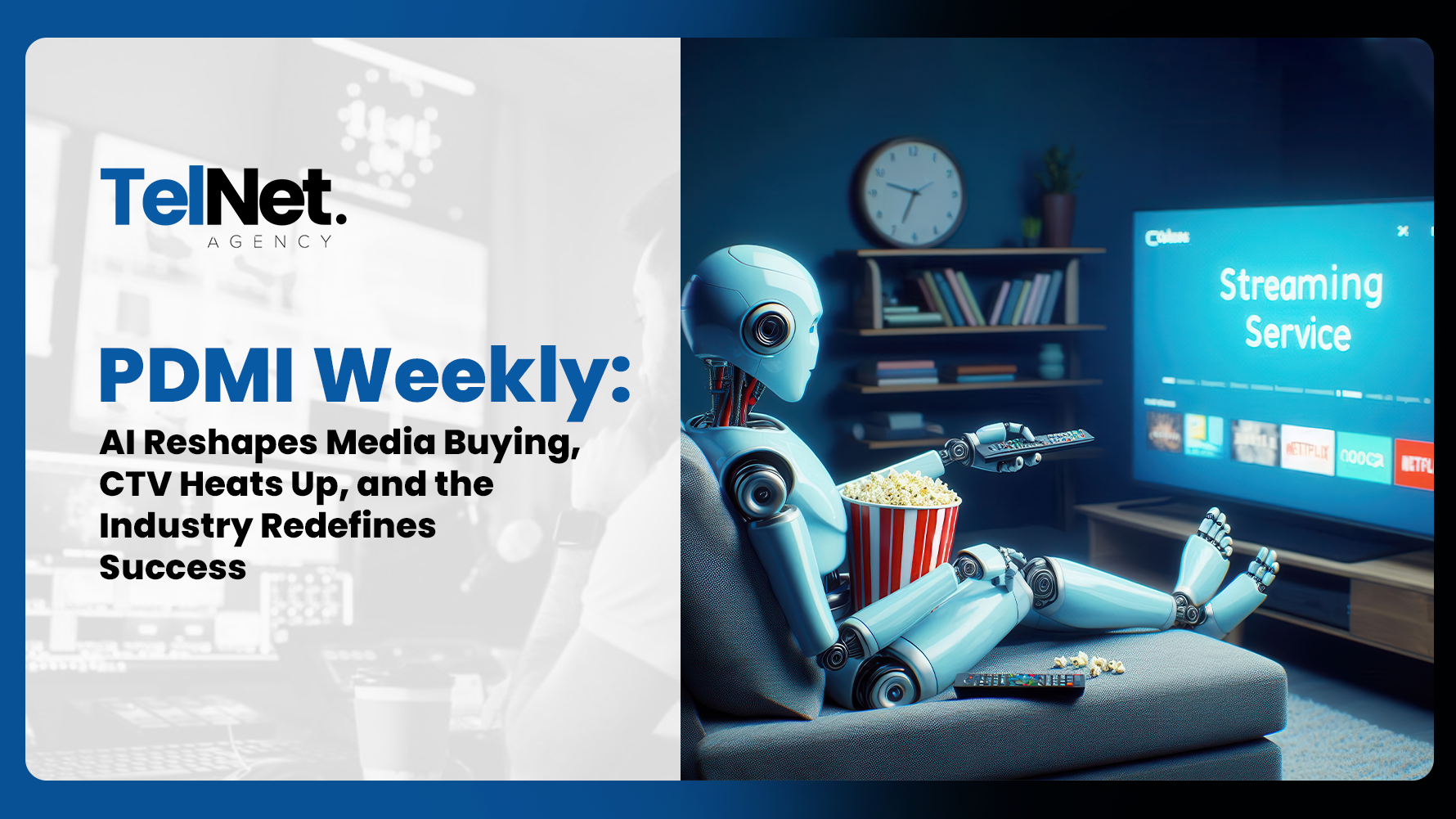

AI is changing how media gets bought and sold. Most of this shift is happening in CTV. The industry is moving past cheap reach. It now focuses on transparency, supply quality, and outcomes.
Let’s break down eight key stories, what each one means, and how they connect to where media is heading next.
This Week’s Top Stories at a Glance
- AI now drives media buying decisions at scale, but clean data and human oversight still control outcomes.
- A new federal privacy bill aims to replace state laws, but the fight over control could block it again.
- Pinterest now lets advertisers retarget users on CTV, turning intent data into cross-screen performance.
- Walmart opened CTV access to SMBs, making streaming TV easier and more accessible to buy.
- Meta is building a path into CTV by extending its ad tools into third-party streaming inventory.
- The industry now measures success by outcomes and transparency, not just reach or low cost.
- ChatGPT’s ad tests show weak performance so far, with pricing and measurement still unresolved.
- Amazon’s Oprah deal shows platforms want full control of content, audience, and ad rights.
1. AI Is Already Changing How Media Gets Bought and Sold
What Last Week’s Take 20 Panel Actually Said
AI Digital focused on execution at scale. Their AI connects user behavior, device data, and cross-platform activity across channels. It uses that data to predict campaign outcomes with up to 96% accuracy based on past performance.
Blockboard focused on the input. AI is only as good as the data behind it. If the data is wrong, the outcome is wrong. They first confirm that an ad is shown to a person, not a bot, and only then let AI optimize it.
Kingstar Media grounded the discussion. AI improves speed and reporting, but it still misses context. In channels like linear TV and radio, human judgment still drives decisions.
They all agree on one thing. AI makes media planning and buying faster. But they handle control differently. AI Digital leans on automation, Blockboard focuses on clean, verified data, and Kingstar keeps humans closely involved.
What This Means for Buyers and Sellers Right Now
AI can now build a full media plan in seconds and handle most of the setup work. That shifts control to the inputs. Clean data now drives results. If the data is off, the outcome is off. Humans still guide the final decisions. They adjust placements, budgets, and context.
2. House Republicans Introduce Federal Data Privacy Bill: The Preemption Fight Is the Real Story
What the Bill Actually Proposes
House Republicans introduced the SECURE Data Act. It aims to create one national privacy law. The goal is to replace the patchwork of state laws with a single standard.
The bill sets clear rules:
- Collect only what you need.
- Let users access, fix, or delete their data.
- Allow opt-out from targeted ads.
It applies to larger companies. A business must either handle data from over 200,000 people a year and make at least $25 million, or handle data from 100,000 people and earn 25% or more of its revenue from selling that data.
The real issue is that this law would replace stricter state rules, like California’s. States would lose the power to enforce their own laws. That’s where the conflict begins.
Does It Have a Realistic Path Forward?
Business groups support one national rule and no private lawsuits. It reduces risk and simplifies compliance. States, especially California, oppose it. They do not want to give up control.
This same fight has blocked past bills. It could block this one, too. For advertisers, the impact is clear. One rule would simplify targeting and data use. Until then, they must manage different laws in each state.
3. Pinterest Just Made Its Audience Retargetable Outside the App for the First Time
What the tvScientific Partnership Does
Pinterest now lets advertisers use its audience data on CTV through its integration with tvScientific. Advertisers can target Pinterest users outside the app on streaming platforms like LG TVs.
tvScientific takes Pinterest’s intent signals and applies them to CTV inventory. This allows advertisers to reach users based on what they are planning to buy. Early results show stronger performance. Campaigns saw 27% higher outcomes per dollar and 65% more purchases.
Why Performance Advertisers Should Pay Attention
This moves Pinterest audience data into CTV. Advertisers can now retarget users beyond the feed and reach them on streaming TV using intent signals. That extends the user journey from discovery to action across screens.
This makes CTV more precise and performance-driven. If this scales, expect other social platforms to do the same.
4. Walmart’s DSP Is Now Targeting SMBs Who Want Into Streaming TV
What Connect Select Offers
Walmart launched Connect Select inside its DSP to make streaming TV ads easier to buy. Advertisers can now access CTV inventory on Vizio and premium publishers like Warner Bros. Discovery. The platform also connects to major SSPs like Magnite and PubMatic.
This is built for small and medium-sized businesses. These advertisers often could not afford or access CTV at scale before. Walmart removes that barrier. It brings premium TV inventory into a simpler buying system.
What This Tells Us About Retail Media’s Next Move
Walmart is turning its DSP into an easy entry point for streaming TV. It is opening CTV access to smaller advertisers who were previously priced out. This shows retail media is expanding beyond search and display into streaming.
5. Meta Has Been Quietly Building Toward CTV. Here’s What We Know
What Digiday Reported and What It Means
Meta has been exploring CTV since early 2025. It has held talks with supply-side platforms like Magnite and FreeWheel, along with TV manufacturers and publishers. The plan is not to build its own inventory. Meta wants access to existing CTV supply.
Advertisers would use Meta’s targeting and AI tools to run ads on third-party CTV inventory. Think of it as an audience extension for TV. Nothing is official yet. But the pattern is clear. Meta is preparing, not experimenting.
What This Would Mean for the Current Supply Landscape
If this launches, Meta will push performance advertising deeper into CTV. That will increase pressure on players like Amazon and YouTube, who are already moving in the same direction.
For buyers, this could make CTV easier to use, with simpler buying, stronger targeting, and clearer measurement.
6. The Industry Is Agreeing on What Success Actually Looks Like
What’s Shifting and Who’s Driving It
Buyers no longer treat low CPMs and scale as success. They now focus on supply quality, transparency, and outcomes. Brands want proof of what they are buying, agencies want clearer signals, and publishers need to show the true value of their inventory.
This push has brought them closer. They now share more data and work more directly with each other. Trust has improved, but it is still limited, with most buyers rating it around 6 or 7 out of 10.
Why This Moment Matters
Buyers no longer ask if a campaign can reach people. They ask if it can prove results. That shifts how campaigns are measured and how inventory is valued. Cheap impressions mean nothing without outcomes.
This sets the direction for 2026. Media buying will focus on performance, not just scale.
7. ChatGPT Tested Ads: The Results Are Mixed, and the Questions Are Bigger
What the Early Test Results Show
ChatGPT has started showing ads to non-logged-in users. That expands inventory, but the results are uneven. Some advertisers saw weak returns. Low ad frequency and limited inventory made campaigns hard to scale.
OpenAI is still testing. It has already lowered the minimum spend from $200,000 to $50,000.
The bigger issue is pricing and measurement. ChatGPT generates answers rather than showing fixed pages, so advertisers cannot easily track impressions, clicks, or the factors that led to a result. That is why no clear way exists yet to price these ads or measure their performance.
Why Pricing and Measurement Are the Real Story
This goes beyond impressions and clicks. ChatGPT generates answers in real time. Advertisers cannot clearly track what drove an outcome or apply CPM and CPC models.
If the industry solves pricing and measurement here, it could change how ads work in AI. Right now, it’s still in early testing and not a finished system.
8. Wondery Wins Oprah’s Podcast: Amazon Gets a Lot More Than Audio
What the Deal Includes
Amazon’s Wondery signed a multi-year deal with Oprah Winfrey. It gets exclusive distribution and ad rights for The Oprah Podcast. Amazon also gets access to The Oprah Winfrey Show library, Oprah’s Book Club, and Oprah’s Favorite Things.
Wondery will distribute the content across Prime Video, Amazon Music, Fire TV, and Audible.
The Bigger Signal for Premium Audio and Publisher Rights
Amazon is bundling Oprah’s content, audience, and distribution into one system. That makes it easier to monetize across video, audio, and more. Platforms now want full control over content and ads, not just access. Expect more competition for big creators and full content rights.
Key Takeaway
Media buying now values proven results and clear data over low-cost reach. AI speeds up execution, while platforms like Pinterest and Walmart push targeting deeper into CTV.
In 2026, winning teams rely on clean inputs, human judgment, and results they can track across every screen.
Frequently Asked Questions
What is Walmart’s Connect Select DSP, and who is it built for?
Walmart’s Connect Select is a DSP feature that lets small and mid-sized businesses easily buy streaming TV ads across premium inventory.
What does Pinterest’s CTV audience targeting capability mean for advertisers?
It lets advertisers retarget Pinterest users on streaming TV using high-intent data tied to real purchase planning.
Is Meta actually launching a CTV ad product?
No official product exists yet, but Meta is actively building partnerships to expand its ad offerings into CTV inventory.
What is the new House Republican data privacy bill proposing?
The bill proposes a single national privacy law with rules on data collection, user rights, and ad targeting.
Does the federal data privacy bill override state privacy laws?
Yes, it would replace stricter state laws like California’s with one federal standard.
What does Wondery’s deal with Oprah mean for podcast advertising?
It shows that platforms now want full control of content, distribution, and ad rights to maximize monetization.
Is ChatGPT planning to run ads permanently?
Not yet, as OpenAI is still testing ads in a phased pilot and adjusting based on results.
How is the industry measuring supply quality and transparency differently in 2026?
The industry now measures success based on actual outcomes, data clarity, and verified supply, rather than just reach or cost.