
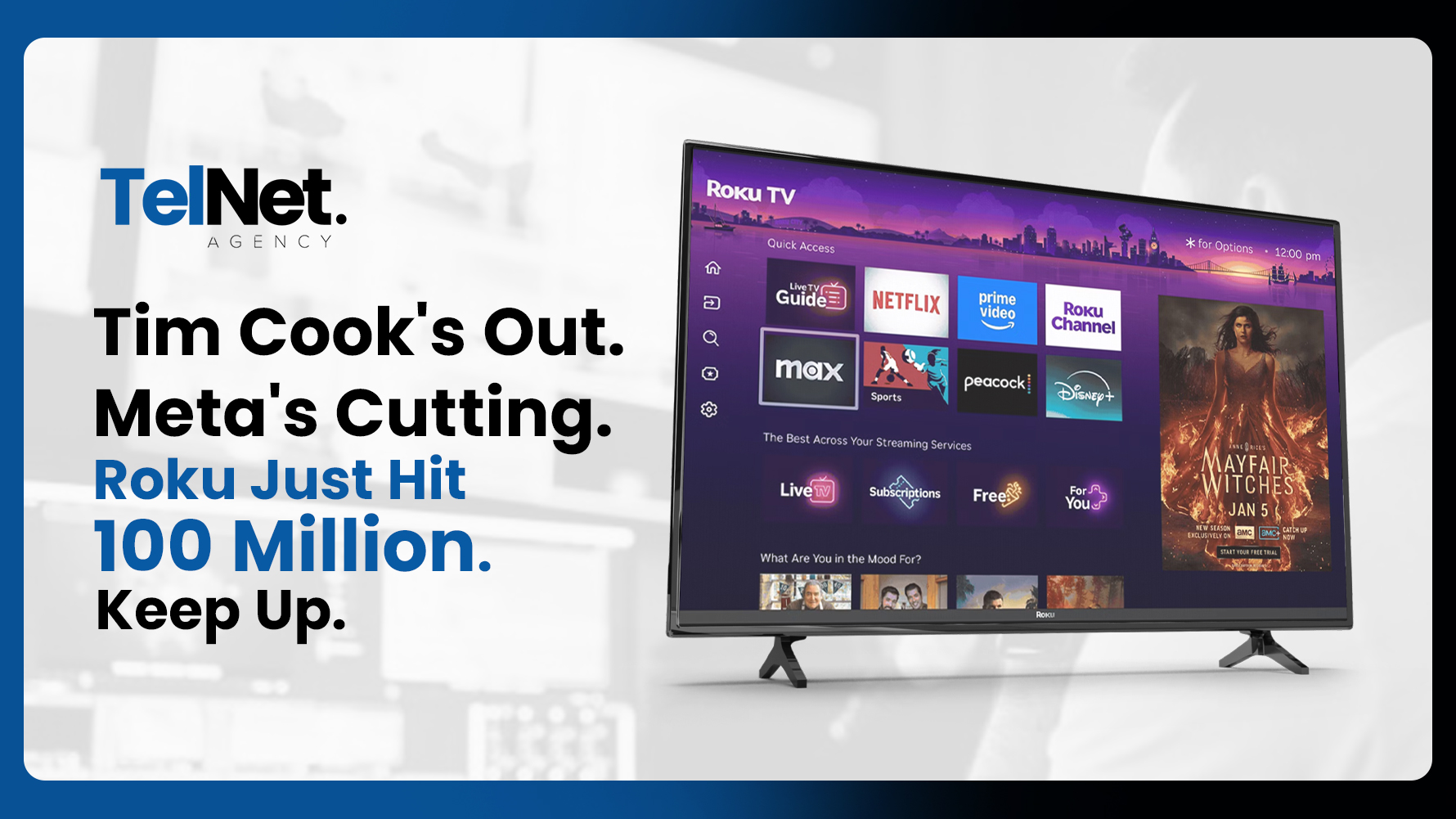

The industry is changing rapidly. Streaming platforms are taking ad budgets, with Roku crossing 100 million households, while leaders like Tim Cook and Bob Liodice step aside. At the same time, companies are cutting costs and investing more in AI.
These shifts point to one clear trend. The market is moving toward a leaner, AI-driven, streaming-first model. Brands and agencies that act on these signals now will be better positioned for the second half of 2026.
Two Industry Giants Are Getting New Leaders. It Matters
Apple will appoint a new CEO on September 1, 2026. Tim Cook will step down and stay on as executive chairman, and John Ternus will take over. Ternus is a hardware engineer with 25 years at Apple and helped build the iPhone, Mac, and Apple Silicon.
Ternus brings a strong product focus and will push performance forward. What this means for advertising:
- Devices will handle more tasks on their own, so companies will send less data to outside servers.
- Advertisers will match ads to user interests while relying less on personal data.
- Faster chips will make video ads run smoothly and update in real time.
Apple keeps a strong focus on privacy. Its App Tracking Transparency update caused an estimated $10 billion loss for major ad platforms and changed how advertisers track and measure performance.
On the other hand, Bob Liodice will step down after 23 years as CEO of the Association of National Advertisers and stay on as an advisor until March 2027. The next CEO will face a new challenge as AI reshapes how ads are made, bought, and measured.
These leadership changes signal a new phase where both tech companies and industry bodies will shape how advertising evolves.
Streaming Is Winning the Budget War: The Numbers Prove It
Streaming platforms are spending more on TV ads. In early 2026, their ad spend rose 9% to $458.5 million. They are using traditional TV to promote their own apps and pull viewers in.
Roku now reaches 100 million global households, with about 75–80 million in the U.S. It also drives 44% of all connected TV viewing time, far ahead of competitors.
Streaming platforms are not just competing with linear TV. They are using it as a funnel. They run TV ads to drive viewers to streaming. Then they keep them there with better targeting and more content.
Meta Cuts 10% of Its Workforce: AI Gets the Money Instead
Meta will cut about 10% of its global workforce. The first round will affect around 8,000 employees in May 2026. More cuts may follow later this year. Meta is shifting money into AI. It plans to boost AI spending by about 60% and invest in chips, data centers, and top talent.
The goal is simple. Do more work with fewer people. Mark Zuckerberg says tasks that once needed large teams can now be done by one skilled person using AI.
What Does This Mean for Advertisers?
Meta will provide less human support and more AI tools. It will use AI to handle targeting, testing, and optimization. Campaigns will run faster with more automation and less manual work.
The Research Finding Every Media Buyer Should Tape to Their Monitor
Omnicom found that showing the same ad too many times can hurt performance. They call this “negative reach.”
This can start after just 2 views of the same ad. At 4 or more, it affects nearly two-thirds of viewers. People stop paying attention. Some even form a negative view of the brand.
The impact is stronger on streaming and social platforms. It is lower on linear TV and websites. There is no fixed rule anymore. The right frequency depends on the campaign, audience, and platform.
What Does This Mean for Brands?
Frequency is not just about saving budget. It protects how people feel about the brand. Control exposure. Rotate creative. Avoid overloading the same user.
PDMI Weighs In on FTC’s Negative Option Rulemaking
Performance-Driven Marketing Institute submitted comments to the Federal Trade Commission on proposed changes to subscription rules.
PDMI says new rules may not be needed. Current laws already cover unfair practices. It warns that strict rules could raise costs and limit how companies design sign-up and cancel flows.
The group also points to a bigger problem. About 28 states already have different rules. This creates confusion and adds work for companies that operate across markets.
Nexstar Fights Back on Tegna Acquisition
Nexstar Media Group will appeal a federal ruling that blocked its $3.54 billion acquisition of Tegna. The case follows an antitrust lawsuit from DirecTV and several U.S. states.
A judge said the deal could reduce competition in many local TV markets. The ruling stops Nexstar from combining operations with Tegna for now, but the deal is not fully canceled.
If approved, the merger would create the largest U.S. broadcast group, reaching about 80% of households.
What Does This Mean for Media Buyers?
This is a fight over scale and control. Fewer owners could mean tighter ad supply and higher prices. More consolidation could also reshape how brands plan and buy local TV media.
The Week’s Bigger Picture
AI is driving change across the industry. It is shaping leadership shifts, moving ad budgets to streaming, and pushing companies to cut costs and invest in automation. These are not separate trends. They are part of the same shift.
Brands and agencies need to act now. Use AI to guide media strategy, not just to speed up production. From boardrooms to the FTC, these changes are setting the direction for where ad dollars will go next.
FAQs
What impact will Tim Cook stepping down have on Apple’s advertising ambitions?
Apple will likely focus on improving its devices to support better ad experiences, such as faster video and on-device AI. At the same time, it will keep strict privacy rules, which limit how advertisers track users and measure performance.
How will Bob Liodice’s departure from the Association of National Advertisers affect the future of advertising associations?
The next leader will need to guide the ANA through AI-driven changes while maintaining industry standards, improving measurement, and managing a more complex, fragmented media landscape.
How are streamers like Roku impacting the traditional TV advertising space?
Streamers are using TV ads to pull viewers into their platforms and shift ad dollars away from linear TV.
What are the potential effects of Meta’s workforce cuts on advertisers?
Meta will rely more on AI tools, which will speed up campaigns but reduce human support.
Why is ad frequency capping now considered a brand safety issue?
Showing the same ad too many times can frustrate users and create a negative view of the brand, so controlling frequency helps protect both user experience and brand reputation.
What does the FTC’s Negative Option rulemaking mean for marketers?
It puts more focus on clear disclosures, consent, and easy cancellation in subscription models.
How will Nexstar Media Group’s appeal of the Tegna acquisition ruling affect the local broadcast market?
The outcome will shape how much control large broadcasters have over ad supply and pricing in local markets.