
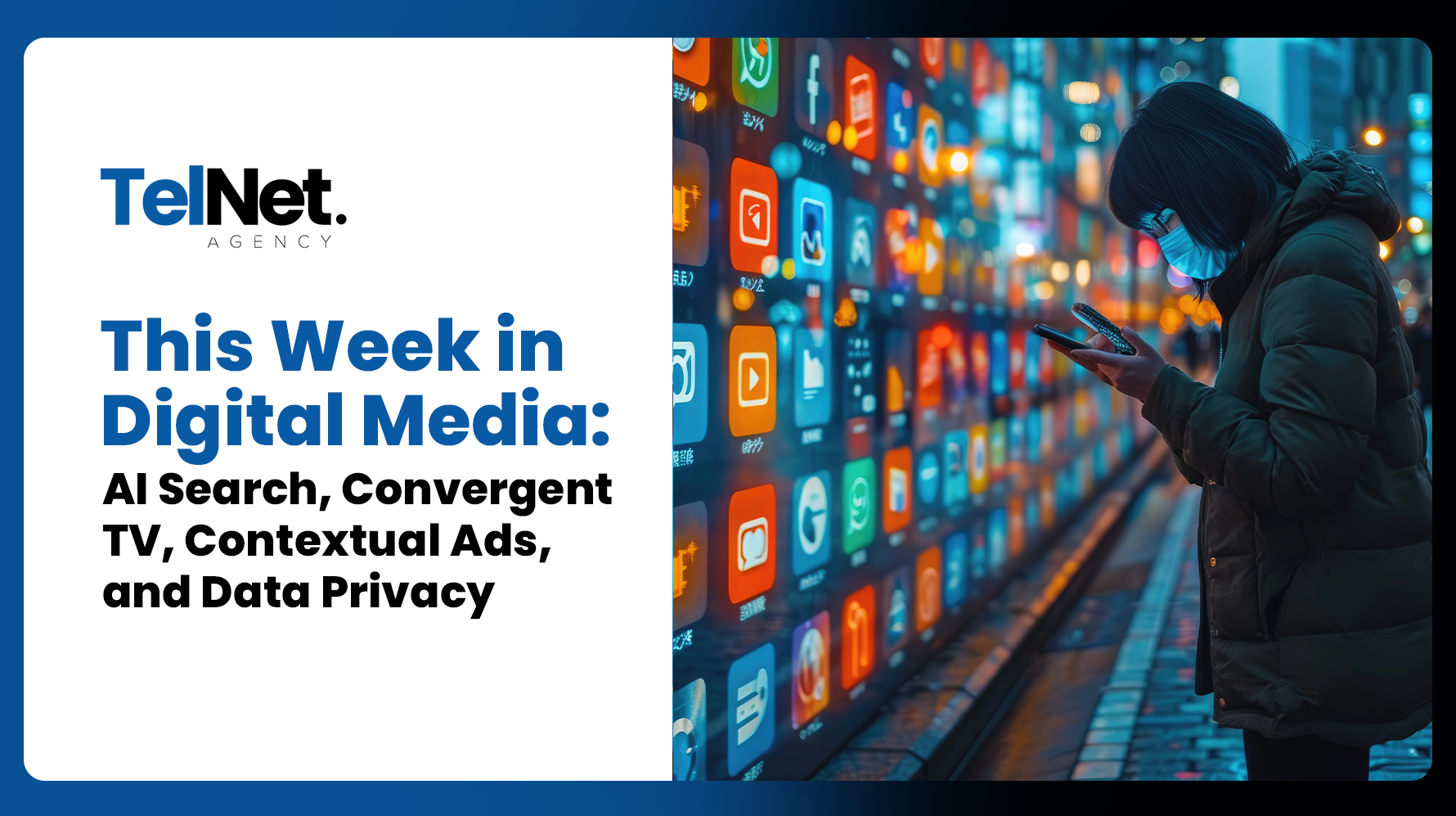

This week’s industry updates highlight major changes across AI-powered marketing, generative AI search, convergent TV strategies, contextual advertising, and expanding data privacy laws.
These changes are happening fast and reshaping how digital media works. Together, they are redefining how brands reach audiences, measure performance, and compete.
AI Is Transforming the Digital Marketing Performance Funnel
AI has moved from experiment to everyday tool. Over the past 12 to 18 months, marketing teams have woven AI into the core of their operations. Campaign planning, reporting, and optimization now run faster with machine learning in the mix.
How Are Agencies and Vendors Using AI?
PDMI Digital & Data Council members explained how AI now supports everyday marketing work. Agencies are using AI to improve performance across several areas:
- Campaign Analysis: AI models process campaign data to uncover patterns and identify which channels drive revenue.
- Predictive Simulations: Teams test budget scenarios and forecast outcomes before launching campaigns.
- Faster Reporting: Some systems generate performance scores in about 0.3 seconds, helping marketers track metrics like revenue per call or visit almost instantly.
- Optimization Support: AI handles complex analysis and repetitive tasks so strategists can focus on creative ideas and smarter campaign decisions.
Why Is AI Adoption Accelerating?
AI tools are becoming cheaper, easier to use, and more powerful. Automation now handles reporting, forecasting, and campaign analysis, giving marketers faster insights. That speed helps brands shift budgets fast and invest more in campaigns that perform best.
Contextual Advertising Is Making a Comeback
As privacy rules tighten and cookies fade, contextual advertising is returning to the spotlight. Instead of tracking users, it places ads next to relevant content so the message feels natural and timely.
At a PDMI Take20 event, leaders from Media.net, Taboola, and RMT shared data showing why this approach works. One campaign saw 50% higher return on ad spend and a 29% drop in cost per acquisition when contextual signals guided placements.
Research also showed that matching ads with the right content can boost ad recall by about 15%.
Why Are Brands Reinvesting in Contextual Strategies?
Contextual ads let brands choose the type of content their ads appear next to, helping prevent them from appearing alongside harmful or inappropriate material.
They also improve relevance because the message matches what people are already reading or watching. And because contextual targeting uses page content rather than personal tracking, it fits naturally into today’s privacy-focused marketing landscape.
The Rise of Generative AI Search
AI search tools are starting to change how people find information online. Instead of scanning pages of links, users now ask AI engines questions and receive direct answers.
Adoption is growing quickly. EMARKETER forecasts that 26.4% of the U.S. population will use generative AI search in 2026, a 12.7% increase from earlier estimates. Platforms like ChatGPT and other AI engines are reshaping how consumers discover brands and products.
How Should Brands Prepare?
Start by publishing clear, well-structured content that answers customer questions. AI systems prefer simple headings, reliable facts, and easy-to-read explanations.
Next, increase your brand’s presence on trusted sites that AI tools often cite, such as forums, reviews, and expert articles. These mentions help AI engines recognize and reference your brand.
Finally, build strategies specifically for Generative Engine Optimization (GEO). Study the sources AI tools cite and create content that matches those formats so your brand appears more often in AI responses.
The Shift Toward Convergent TV Advertising
Video viewing is spreading across TVs, streaming apps, and connected devices. As audiences move between platforms, marketers are rethinking how they plan and measure TV campaigns.
YouTube Is Doubling Down on TV Screens
After dominating desktop and mobile video, YouTube is now targeting television. Company leaders say the future of video lies on the TV screen, where more people now watch online content.
Products like the YouTube smart TV app and YouTube TV service are accelerating that shift. Major advertisers already invest heavily in the platform, and the return on investment is well documented. Creator-led ads are helping drive that growth.
YouTube says creator ads often outperform traditional TV ads. Audiences trust creators and spend more time watching their content. That trust turns creator partnerships into powerful advertising.
Linear vs. Streaming Is No Longer the Right Debate
Experts say the focus should be on responsiveness, measurement, and reaching viewers wherever they watch. Audiences now split their time across broadcast TV, streaming apps, and connected devices. That shift makes it harder to treat each platform as a separate channel.
Smart marketers now use convergent TV strategies. They combine linear and streaming campaigns to expand reach, optimize performance, and adapt quickly as viewing habits change.
ChatGPT Advertising Is Already Attracting Major Brands
OpenAI began testing ads in ChatGPT on February 9, 2026, showing promotions based on a user’s conversation. More than 100 brand promotions appeared within two weeks, with retail and grocery ads leading the mix. Travel and food delivery brands also appear frequently.
What Does This Mean for the Future of AI Monetization?
As more people ask AI tools for recommendations, brands will need strategies for these new discovery channels. Performance marketing may soon expand beyond search and social into AI platforms.
Streaming Consolidation Could Reshape Media Distribution
Media companies are rethinking how they distribute TV content. As streaming grows and cable viewership declines, many networks are shifting their focus toward direct-to-consumer platforms.
Paramount Considering Moving Cable Brands to Streaming
Paramount Skydance leaders recently suggested that several iconic cable brands could move to streaming platforms. The discussion follows the company’s broader restructuring tied to the Warner Bros. Discovery deal.
Executives believe moving well-known networks into streaming could unlock new value. At the same time, companies must balance this shift because cable channels still generate revenue through distribution fees.
What Does This Mean for Advertisers?
As more networks move to streaming, audiences will continue to shift to digital TV platforms. This will likely increase the scale of streaming ad inventory.
Advertisers will need stronger cross-platform strategies. Campaigns that combine broadcast, streaming, and connected TV will help brands reach viewers.
Data Privacy Regulations Continue to Expand
Data privacy rules continue to tighten across the United States. As more states pass new laws, companies face growing pressure to rethink how they collect and use consumer data.
Maine’s New Privacy Bill
Maine’s Senate recently passed a privacy bill that would place strict limits on data collection and targeted advertising. The proposal would ban the sale of sensitive data, including precise location information and biometric data.
Advertising industry groups oppose the bill. They argue that restrictions on data collection could make it harder for businesses to reach potential customers.
What Are the Implications for Digital Marketing?
If enacted, the law would require stronger data compliance practices. Companies would need clearer rules for how they collect and use personal information.
Tighter restrictions could also limit certain targeting strategies. Marketers may need to rely more on contextual advertising and first-party data.
Key Takeaways from This Week’s Digital Media News
- AI is becoming central to marketing, helping brands optimize campaigns and analyze performance faster.
- Contextual advertising is resurging as privacy rules limit cookie-based targeting.
- Generative AI search is rising, changing how consumers discover products and information.
- Convergent TV strategies are growing, blending linear and streaming to reach viewers across screens.
- AI platforms like ChatGPT are emerging as new ad channels for brand discovery.
- Privacy regulations continue expanding, forcing marketers to adapt their data strategies.
The Future of Digital Advertising
AI innovation, streaming shifts, and new privacy rules are rapidly reshaping digital advertising. Marketers now face a landscape where AI tools guide discovery, contextual targeting replaces cookies, and convergent TV blends streaming with traditional broadcast.
Brands that move early will gain the advantage. Those who adapt their strategies for AI search, cross-platform video, and stricter data rules will reach audiences more effectively in the next wave of digital media.
Frequently Asked Questions
How are marketers using AI to improve campaign performance?
AI is now a core tool for processing campaign data in real-time, running predictive budget simulations, and generating performance reports in less than a second.
Why are brands returning to contextual advertising over cookie-based tracking?
Brands are pivoting back to contextual ads because they respect modern privacy laws while boosting ad recall by 15% by placing content next to related content.
What is the projected growth for generative AI search usage?
By 2026, it is estimated that over 26% of the U.S. population will use generative AI engines to find information and discover brands.
What is “Convergent TV” and why does it matter for advertisers?
Convergent TV is a strategy that blends traditional broadcast with streaming and connected TV to reach audiences regardless of which screen they are watching.
What makes the new Maine privacy bill a concern for the industry?
The bill proposes strict bans on selling sensitive data like biometric info and precise locations, which could significantly limit traditional targeted advertising.