
Quick Summary
- Great campaigns depend on one clear story across every channel.
- TV and social need different formats because audiences behave differently.
- TelNet works across DRTV, paid media, ecommerce, CRO, retail, and digital campaigns.
- A strong campaign keeps the same message, audience focus, and CTA across every asset.
- One production idea should create several assets, not one finished commercial.
A campaign works across TV and social when the story stays clear and the format changes by platform. TV gives brands room for proof and trust. Social turns the same idea into short moments people notice fast. The strongest creative keeps one promise across every screen.
Why Does Storytelling Still Matter in Modern Marketing?
People forget feature lists faster than they remember a clear problem, a useful solution, and a reason to care. A feature explains what a product does. A story shows why it matters to the customer.
The customer journey rarely starts and ends on one channel. A person might see a TV spot, search the brand, visit a landing page, then return through email or retargeting.
Nielsen reported streaming reached 44.8% of total TV usage in May 2025, passing broadcast and cable combined for the first time. IAB projected digital video would capture nearly 60% of total TV and video ad spend in 2025. Video has moved across screens, so the story needs to move with it.
Why Do Audiences Remember Stories More Than Features?
Stories create context. They show the problem, outcome, and next action without forcing the viewer to decode a feature list.
What Makes TV and Social Creative Different?
TV viewers usually watch in a more focused setting. Social users scroll, skip, pause, mute, and move fast. The same story needs different pacing for each behavior.
| Channel | Audience Behavior | Creative Priority | Best Use |
| Broadcast TV | Longer attention window | Visual proof and trust | Awareness and response |
| Connected TV | Lean-back viewing with targeting | Clear message and CTA | Awareness and action |
| DRTV | Response-driven viewing | Demonstration and offer clarity | Sales or leads |
| Social Video | Fast scrolling | Hook and quick relevance | Engagement and retargeting |
| Landing Pages | Intent-driven reading | Proof and next steps | Conversion |
How Should One Story Become Multiple Formats?
The core message should stay the same. The execution should change. A TV spot might show the full proof. A social cutdown might open with the problem. A carousel might split benefits, proof, and CTA.
What is the TelNet Creative Process?
TelNet offers a number of services, including DRTV services, paid media, ecommerce, CRO, retail, and full-funnel digital marketing. That mix needs creative built for multiple placements.
Start With the Customer Problem
Strong creative starts before the script. The team defines the customer pain, buying motivation, and desired outcome.
Build the Core Narrative
A useful campaign narrative answers four questions. What challenge exists? What solves it? Why should the audience care now? What action should they take?
Create a Flexible Campaign Framework
A flexible framework gives every asset the same foundation. TelNet’s paid media and conversion rate optimization work better when the ad, landing page, and CTA connect.
How Does TelNet Approach TV Creative?
TV creative needs clarity. For DRTV and broadcast campaigns, the message should focus on one problem, one solution, and one next step.
TelNet’s DRTV page highlights campaign management, market research, offer development, media, web, and social media infrastructure. That supports creative built for response, not attention alone.
Focus on Visual Impact
TV gives brands space to show the product, service, result, or transformation. Clear demonstrations create trust faster than broad claims.
Simplify the Message
A TV spot should not carry five ideas. It needs one core promise, one proof point, and one CTA.
How Should Stories Adapt for Social Media?
Social creative needs a faster entry point. TelNet lists Facebook, Instagram, and TikTok ads under paid media, along with search, social, and display campaign management.
Lead With the Hook
The hook should show the problem, result, or tension immediately. A slow intro gives the viewer no reason to stop.
Break Larger Stories Into Smaller Moments
One TV concept might create short-form videos, Reels, product clips, carousels, retargeting ads, landing page visuals, and email creative. Each piece should serve one job.
How Do You Maintain Consistency Across Every Channel?
Consistency does not mean identical creative. It means the audience keeps seeing the same promise, proof, and next step.
Keep the value proposition, audience focus, campaign objective, brand tone, CTA, and visual cues consistent. Adapt the length, hook, caption style, aspect ratio, on-screen text, and level of detail by platform.
How Does One Campaign Turn Into Many Assets?
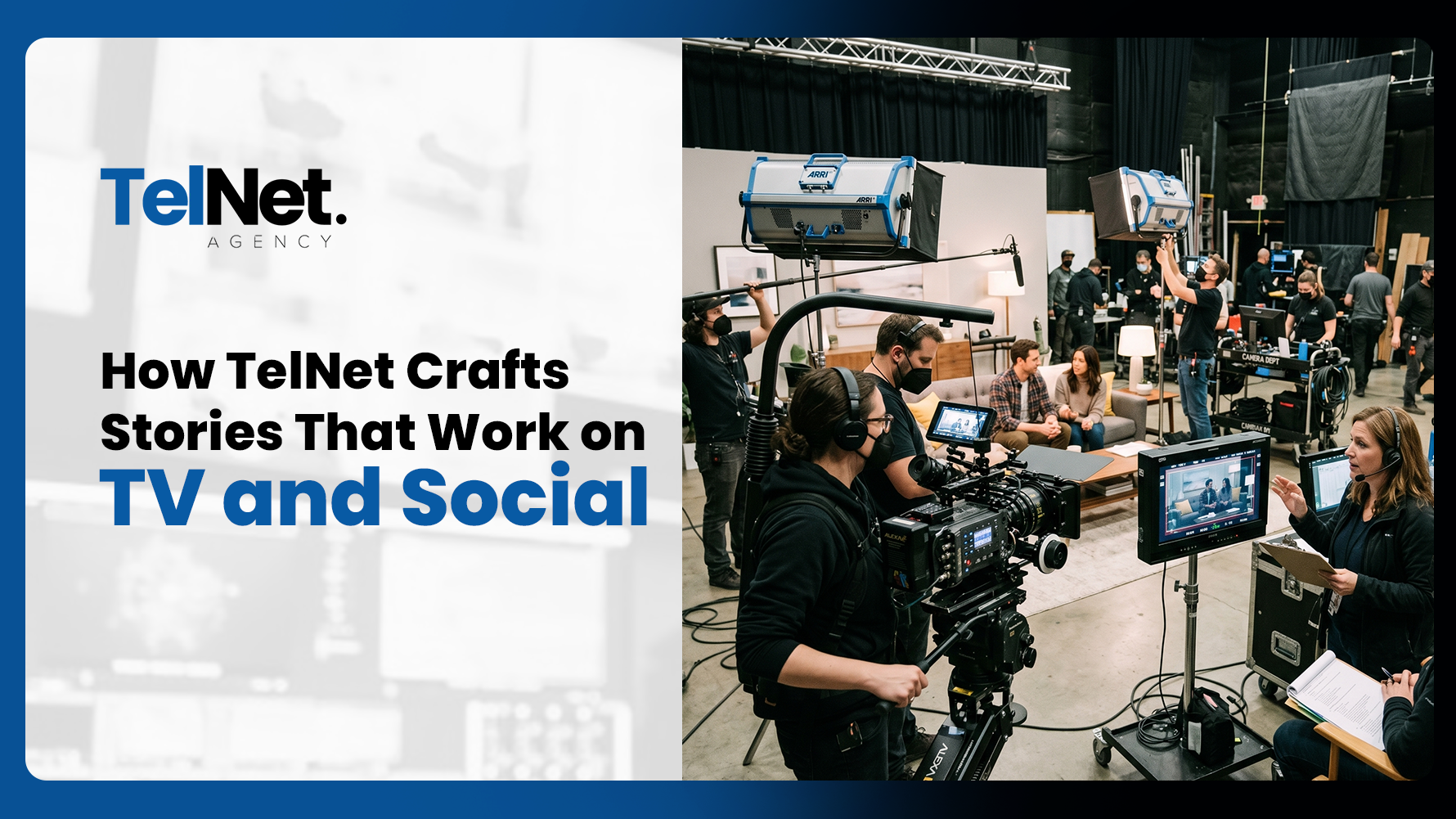
A single TV shoot creates more value when the team plans for repurposing before production. The shot list should include footage for TV, social, website, display, and email. This controls creative costs and gives the brand a longer content lifespan.
What Role Does Data Play in Creative Decisions?
Creative should not rely on opinions alone. Audience research, platform insights, and performance data should guide the message before and after launch. Testing helps refine headlines, hooks, CTAs, video lengths, landing page copy, and offer framing.
Common Mistakes Brands Make When Repurposing Content
Repurposing content saves time, but only when the original idea changes for the platform. The following are the common mistakes brands make when repurposing content.
1. Posting the Same Asset Everywhere
The same video will not perform the same way on TV, Instagram, LinkedIn, TikTok, and a landing page. Each channel has a different screen size, viewing habit, and level of audience attention.
The message should stay consistent. The format should change. A 30-second TV spot might become a 10-second social hook, a carousel, a product demo clip, and a landing page visual.
2. Ignoring Platform Behavior
TV viewers usually give the story more time. Social users scroll fast, often with sound off, and decide in seconds whether to stay or leave.
Creative should match how people use the platform. That means stronger openings for social, clearer captions, tighter edits, and platform-specific calls to action.
3. Focusing Only on Production Quality
High production quality matters, but it does not replace strategy. A polished video still fails if the problem, offer, and next step feel unclear.
Good creative needs both quality and purpose. The visuals should support the message, not distract from it.
4. Losing the Core Story During Adaptation
Some brands cut one campaign into many pieces without keeping the main idea intact. The result feels scattered across channels.
Every asset should connect back to the same customer problem, solution, proof point, and action. Adaptation should make the story easier to consume, not harder to recognize.
What Makes a Story Work Across TV and Social?
A story works across TV and social when the audience understands the problem, sees a relevant solution, and knows what to do next.
A Clear Customer Problem
The story should start with the customer’s real need, frustration, or desired outcome. This gives the creative a reason to exist.
When the problem feels specific, the audience pays attention faster. It also helps the brand avoid generic messaging.
A Relevant Solution
The solution should answer the problem without adding extra claims. The audience should understand what the brand offers and why it matters.
A relevant solution feels practical. It connects directly to the customer’s goal, not only to the brand’s feature list.
Strong Visual Storytelling
TV and social both depend on visual clarity. The viewer should understand the idea even before reading long copy.
Strong visuals show the product, service, result, or emotional moment in a simple way. This helps the message travel across screens.
Consistent Messaging
The campaign should repeat the same core promise across TV, social, web, and email. Repetition helps people recognize the brand and remember the message.
Consistency does not mean copying the same asset. It means keeping the same value proposition, audience focus, and next step.
Clear Next Steps for the Audience
Every asset should tell the viewer what to do next. That might mean visiting a landing page, watching another video, requesting information, or making a purchase.
A clear next step turns attention into action. Without it, even strong creative leaves the audience unsure.
How Does Full-Funnel Thinking Shape Creative?
Every asset needs a purpose. Awareness content creates interest, consideration content builds confidence, and conversion content helps the viewer act.
Final Thoughts
Successful campaigns start with stories, not channels. TV, CTV, DRTV, social, landing pages, and email all play different roles, but the audience should feel the same brand promise at every step.
FAQs
1. How do brands adapt TV commercials for social media?
They shorten the video, lead with a stronger hook, adjust the aspect ratio, add captions, and focus each cutdown on one message.
2. Why is storytelling important in marketing?
Storytelling gives the audience context. It explains the problem, the solution, and the reason to act.
3. What makes creative work across multiple channels?
A clear message, strong visual direction, audience relevance, and consistent CTA make creative work across platforms.
4. How does Telnet approach cross-channel campaigns?
TelNet approaches cross-channel campaigns by connecting DRTV, paid media, e-commerce, CRO, retail, and digital marketing around one campaign goal.
5. Should TV and social media use the same messaging?
TV and social media should use the same core message, but the format, pacing, visuals, and CTA should match each platform.
6. How can one campaign create content for multiple platforms?
One campaign creates content for multiple platforms when the team plans assets for TV, CTV, social videos, landing pages, display ads, and email before production begins.