

Key Takeaways
- The streaming wars have made TV advertising more accessible for businesses with modest budgets.
- Connected TV (CTV) offers flexible budgeting, precise audience targeting, and detailed performance measurement.
- Ad-supported streaming platforms and FAST channels have expanded advertising opportunities across multiple services.
- Small and mid-sized businesses can test campaigns, optimize performance, and scale spending based on results.
- Success depends on choosing the right audience, creative, and platform rather than simply increasing ad spend.
- Understanding the benefits and challenges of streaming advertising helps businesses make smarter media buying decisions.
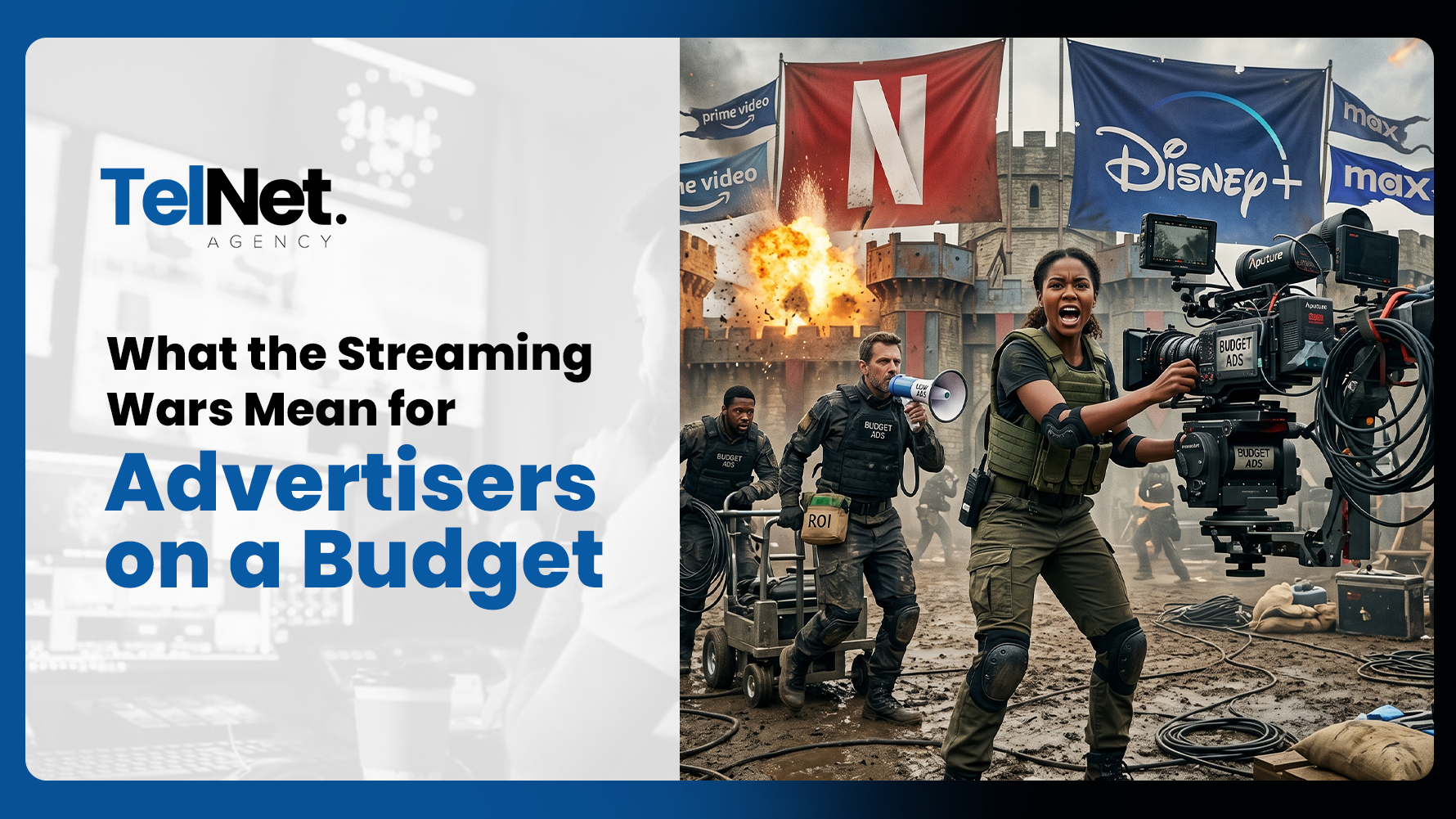
The streaming wars have made TV advertising more accessible for businesses with modest budgets. As streaming platforms compete for viewers and advertising revenue, brands now have more opportunities to reach targeted audiences with greater flexibility than traditional television.
That does not mean streaming advertising is always inexpensive or the right fit for every business. Success still depends on choosing the right audience, platform, and campaign strategy.
This guide explains how the streaming wars have changed TV advertising, the benefits and challenges of Connected TV (CTV) advertising, and how budget-conscious advertisers can make smarter media buying decisions.
How the Streaming Wars Changed TV Advertising
1. TV Advertising Is No Longer Reserved for Large Brands
For years, television advertising was often associated with high production costs and significant media budgets.
Streaming has introduced new buying options that allow more businesses to participate without making the same upfront commitments.
2. More Platforms Create More Advertising Opportunities
Streaming services are competing for:
- Viewers
- Subscribers
- Advertising revenue
That competition has increased available advertising inventory and given marketers more placement options than ever before.
3. Today’s Streaming Ecosystem Looks Different
Advertisers can now choose from multiple types of streaming services, including:
- Subscription platforms
- Ad-supported streaming services
- Free streaming TV channels
- Hybrid subscription and advertising models
Why Streaming Makes TV Advertising More Affordable
1. Traditional TV vs Streaming Advertising
Traditional television buying usually involves:
- Higher minimum spending
- Fixed schedules
- Less campaign flexibility
Streaming advertising offers:
- More flexible buying models
- Lower entry points
- Easier campaign adjustments
2. Lower Entry Budgets
Many streaming platforms allow advertisers to start with budgets that would not have been practical for national television campaigns.
This creates opportunities for startups, local businesses, and growing e-commerce brands.
3. Flexible Budget Allocation
Streaming campaigns can be adjusted throughout their lifecycle.
Rather than committing an entire budget upfront, advertisers can increase investment as performance improves.
4. Test Before You Scale
Smaller campaigns make it easier to validate:
- Creative
- Audience targeting
- Messaging
- Platform selection
Successful campaigns can then be expanded with greater confidence. Many businesses begin with small pilot campaigns before increasing spend. Here are some budget-friendly ways to test TV advertising for small businesses.
Why Streaming Delivers More Than Traditional TV
Streaming offers more than flexible budgets. It gives advertisers greater control over who sees their ads, how campaigns are measured, and how quickly they can improve performance.
| Advantage | What It Means for Advertisers |
| Better Audience Targeting | Reach viewers based on geography, demographics, interests, viewing behavior, and even specific cities, regions, or ZIP codes. |
| Better Performance Measurement | Track key metrics such as impressions, reach, video completion rate, website visits, and click-through rate to understand campaign performance better. |
| Faster Campaign Optimization | Adjust audiences, budgets, bidding strategies, or creative while campaigns are running using real-time performance data. |
Understanding the Different Types of Streaming Inventory
1. Premium Ad-Supported Streaming Platforms
Premium services combine high-quality content with advertising opportunities.
Examples include:
- Netflix Ad-Supported Plan
- Hulu
- Disney+
- Max
These platforms often provide premium content alongside targeted advertising options.
2. Free Ad-Supported Streaming TV (FAST)
FAST platforms generate revenue entirely through advertising.
Popular examples include:
- Tubi
- Pluto TV
- Roku Channel
These services typically offer large audiences with no subscription fees for viewers.
3. Aggregated Connected TV Buying Platforms
Demand Side Platforms (DSPs) allow advertisers to purchase inventory across multiple streaming services from a single platform.
This simplifies campaign management while expanding audience reach.
Is Streaming Advertising Right for Your Business?
Streaming is not the right fit for every advertiser. Your goals, audience, and available creative all influence whether it makes sense.
Streaming may be a good fit if you:
- Sell products online
- Want to build brand awareness
- Already invested in digital advertising
- Have quality video creative
Streaming may be less effective if you:
- Have an extremely limited budget
- Lack of video assets
- Target audiences that rarely use streaming services
How Small and Mid-Sized Brands Should Get Started
Define Your Goal
Decide whether your priority is:
- Brand awareness
- Website traffic
- Lead generation
- Product sales
Your objective should guide every campaign decision.
Choose Platforms Based on Audience
Every streaming platform attracts different viewers.
Focus on the platforms that best match your target audience instead of spreading your budget too widely.
Build a Testing Framework
Begin with controlled testing.
Experiment with:
- Creative variations
- Audience segments
- Budget allocation
- Platform performance
Use the results to guide future investment. Testing becomes even more effective when your messaging stays consistent across channels. See how to build a story across TV and social media.
Challenges Advertisers Still Face
Streaming has made TV advertising more accessible, but it also introduces new challenges. Understanding these limitations can help advertisers build more effective campaigns.
- Audience fragmentation: Viewers are spread across multiple streaming platforms, making it harder to reach the same audience with a single campaign.
- Platform complexity: Each platform has its own buying process, targeting options, and reporting capabilities, which can complicate campaign management.
- Creative quality: Precise targeting cannot make up for weak creative. Strong messaging and engaging video remain essential for driving results. Learn how storytelling in TV commercials and digital campaigns can improve audience engagement and campaign performance.
Planning across multiple platforms, using consistent measurement, and investing in quality creative can help advertisers overcome these challenges.
Streaming vs Traditional TV: A Quick Comparison
| Factor | Traditional TV | Streaming / CTV |
| Entry Budget | Higher | Often Lower |
| Audience Targeting | Broad | Granular |
| Geographic Targeting | Limited | Precise |
| Measurement | Limited | Detailed |
| Campaign Flexibility | Lower | Higher |
| Optimization Speed | Slower | Faster |
| Creative Testing | Difficult | Easier |
Conclusion
The streaming wars have made TV advertising more accessible, giving businesses new ways to reach targeted audiences with greater flexibility and measurable results. For budget-conscious advertisers, success depends on choosing the right audience, creative, and campaign strategy rather than simply spending more.
If you’re ready to explore Connected TV (CTV) advertising, TELNET Agency can help you build a strategy that maximizes your budget and delivers measurable results.
Frequently Asked Questions
1. What is Connected TV (CTV) advertising?
Connected TV (CTV) advertising refers to video ads shown on internet-connected televisions through streaming apps and services. It allows advertisers to reach viewers watching content on smart TVs, streaming devices, and gaming consoles with more targeted campaigns than they can with traditional television.
2. Is streaming advertising more affordable than traditional TV?
In many cases, yes. Streaming platforms often offer lower entry budgets and more flexible buying options than traditional television, making them accessible to small and mid-sized businesses. However, actual costs vary depending on the platform, audience size, targeting options, and campaign objectives.
3. What are FAST channels?
FAST stands for Free Ad-Supported Streaming TV. These platforms provide viewers with free content while generating revenue through advertising instead of subscription fees. Popular examples include Tubi, Pluto TV, and The Roku Channel.
4. Can small businesses advertise on streaming platforms?
Yes. Many streaming platforms and demand-side platforms allow businesses to launch campaigns with modest budgets and gradually increase spending as performance improves. Starting with a smaller campaign also gives advertisers an opportunity to test audiences and creative before scaling.
5. How do advertisers measure streaming campaigns?
Streaming campaigns typically provide detailed reporting that goes beyond traditional television metrics. Advertisers can track impressions, reach, video completion rates, website visits, conversions, and other performance indicators to evaluate results and optimize campaigns in real time.