

Key Takeaways:
- Prioritize SEO when you want durable visibility, stronger authority, and lower reliance on paid clicks over time.
- Prioritize paid media when you need speed, tighter audience control, and faster testing.
- Prioritize both when you want short-term pipeline and long-term demand capture in the same plan.
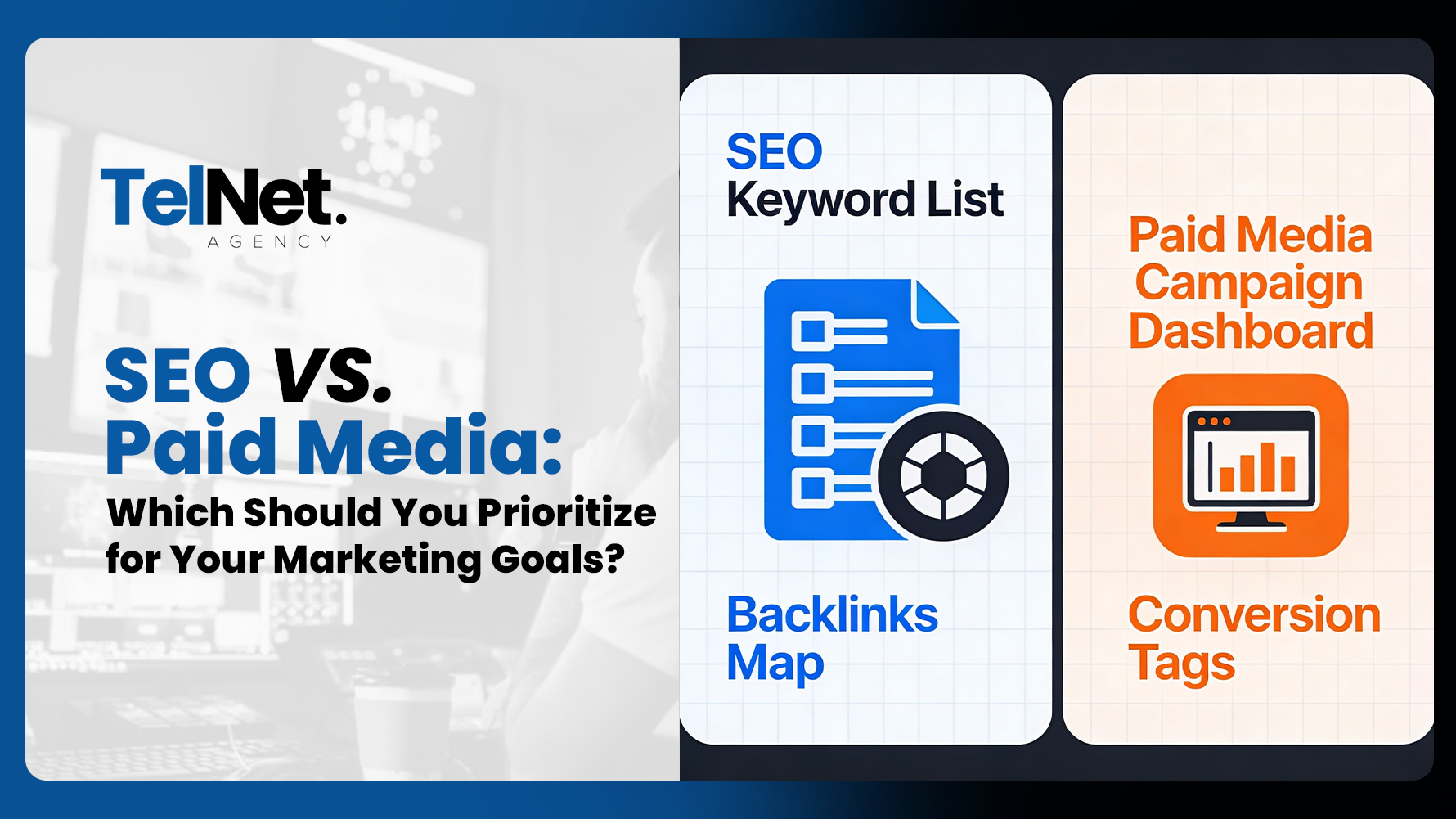
The best choice depends on your goal, timeline, and budget. Paid media usually comes first for launches, promotions, and rapid feedback. SEO usually comes first for brands that want steady visibility, stronger authority, and compounding traffic from search. In practice, the strongest mix uses paid media for fast traction and SEO for lasting growth.
Which Channel Fits Your Goal Best?
If generating leads, running tests quickly, or meeting a specific deadline is your main focus, then using paid media is an excellent choice. If the key concern is building long-term demand, increasing your website’s organic visibility in search engines, or reducing reliance on paid advertising, then SEO is your best option. If you have the resources to use both methods simultaneously, start with both and give each method time to produce its best results.
Why Does SEO Deserve Priority for Long-Term Growth?
SEO is described by Google as a way to build awareness with search engines about website content so that users can more easily find those sites when searching on Google. However, there is no guarantee that any content on the Internet will be visible on Google; therefore, SEO is often a long-term strategy that relies on producing consistent, high-quality content and an orderly, well-structured website design.
What SEO Gives You
- Compounding visibility: A strong page keeps generating discovery after publication, and each visit does not require a fresh click payment.
- Higher trust during research: SEO supports service pages, guides, comparison pages, and problem-solving content that meets buyers during research.
- Stronger site foundations: Technical work, content structure, and internal links improve crawlability, indexation, and user discovery.
What SEO Costs You
- Results take time.
- Competitive terms demand consistent content and technical work.
- Google does not guarantee ranking gains from every site change.
Why Does Paid Media Deserve Priority for Speed?
Paid media gives you direct control over targeting, budget, creative, and landing page tests. Google Ads’ Keyword Planner refreshes forecasts daily and uses the last 7 to 10 days, adjusted for seasonality, which makes paid search useful for fast planning and faster feedback.
What Paid Media Gives You
- Faster launch support: Paid search and paid social put an offer in front of a defined audience without waiting for organic rankings.
- Sharper planning: Keyword Planner shows monthly search estimates and cost estimates before launch.
- Better testing loops: Google says responsive search ads test combinations of assets to serve more relevant messages.
- Remarketing support: Google Ads remarketing reaches past visitors and shows products or services they viewed, which helps recover lost sessions and unfinished actions.
What Paid Media Costs You
- Reach depends on active spend.
- Google flags campaigns as “Limited by budget” when daily budget restricts performance.
- Google’s spending rules tie delivery to daily and monthly limits, so ad visibility depends on an active budget.
How Do SEO And Paid Media Work Better Together?
SEO and paid media solve different problems. SEO builds durable discovery. Paid media supplies speed, testing, and remarketing. When you combine them, you reduce guesswork and get a better signal from every campaign.
What Does A Practical Combined Approach Look Like?
- Use paid media first to test keyword themes, offers, and landing page angles.
- Turn winning themes into evergreen SEO pages and supporting blog content.
- Use remarketing to bring back visitors who found you through search or paid campaigns but did not convert.
- Pair both with conversion rate optimization so traffic quality and landing page performance improve together.
TelNet Agency’s focus on SEO, paid media, and CRO reflects a simple truth. Your growth depends on more than one channel. Traffic quality, page experience, and conversion performance all shape the same revenue outcome.
What Does This Look Like in Real Campaigns?
- E-commerce brand: Run paid search for priority products, then build SEO around category pages, buying guides, and product detail pages.
- SaaS company: Use paid campaigns to test feature and pain-point messaging, then publish pages around the themes that keep converting.
- Local business: Pair ads with local SEO. Google says that complete and accurate Business Profile details make businesses more likely to appear in local search results, and that local ranking relies mainly on relevance, distance, and popularity.
Conclusion
The best place to begin is where your business requires you to be at this point in time. Use SEO when you require long-term visibility, more authority, and long-term growth. Use paid media where you require traffic, testing, and prompt feedback on a campaign. Combine both when you want immediate results and a search presence that continues to work even after the campaign ends.
FAQs
Is SEO better than paid media?
SEO is better for durable visibility and long-term efficiency. Paid media is better for speed, targeting, and launches. The right first move depends on what your business needs first.
When should you start with paid media?
Start with paid media when you have a product launch, promotion, tight timeline, or a need to test messaging quickly. Keyword Planner and responsive search ads support faster planning and iteration.
When should you start with SEO?
Start with SEO when you need sustained search visibility, evergreen traffic, and a stronger foundation for future demand capture. SEO also supports discovery across research-stage and high-intent searches.
Should local businesses use both?
Yes. Paid media drives immediate visibility, while local SEO improves long-term discovery. Keep your Business Profile complete and accurate, since Google ties local results to relevance, distance, and popularity.